Geometry Dash SubZero
RobTop GamesArcade
4.538.76K Reviews
- Version
- 2.2.148
- Installs
- 100.00M
- Age Rating
- Everyone
Screenshots
Play Laurelvault


Our Review of Geometry Dash SubZero
 Analysis by Appyee
Ever had one of those days where you just want to tune out the world and get lost in a game that’s both challenging and ridiculously fun? That’s exactly what I found with Geometry Dash SubZero. It’s a rhythm-based action platformer that’s got me hooked from the get-go. Whether you’re on Android or iOS, this game is a must-try if you love a good challenge.
The first sessions make the appeal easy to understand: the rules are simple to grasp, but succeeding takes attention and practice. I can start a level during a short break, fail quickly, and still feel that I have learned something about its timing. The catch is that a quick session can turn into repeated attempts before I notice how much time has passed. I enjoy that pull, though I wouldn’t recommend playing when I need something calming or genuinely low effort.
Why Geometry Dash SubZero Stands Out
Okay, let’s dive into what makes Geometry Dash SubZero tick. First things first, this game is a spin-off of the original Geometry Dash, and it brings that same addictive gameplay with a little extra flair. It’s free to play, which is always a bonus, and it’s designed to test both your reflexes and your patience. Trust me, you’ll need both.
RobTop Games is the developer behind this arcade game, and its focused design is part of its appeal: the challenge is built around navigating hazards in time with the music, rather than managing a long list of systems. It has a 4.5 average from around 961,000 ratings, and more than 100 million installs. Those figures suggest a broad audience, but popularity won’t make the demanding timing suit everyone. The game is rated Everyone, is free, and its current version is 2.2.147; it runs on Android 6.0 or later. It was released on December 21, 2017, so this is not a brand-new novelty, and whether it earns a lasting place depends more on your appetite for repetition than on its age.
The Gameplay Experience
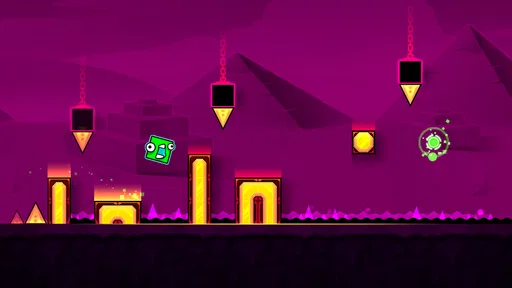
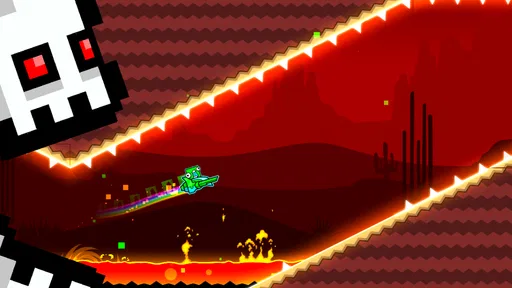
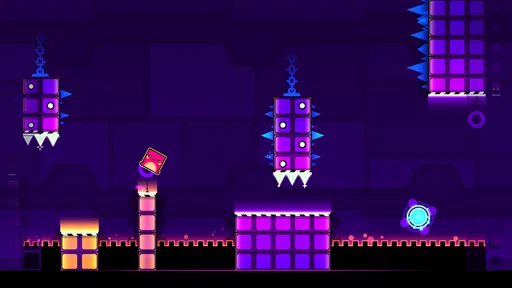
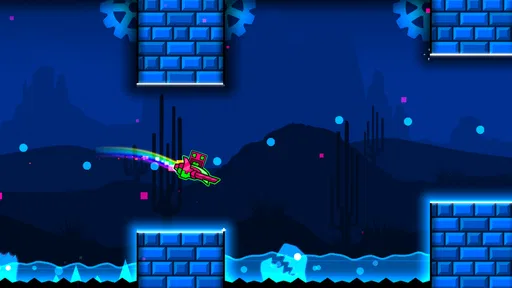
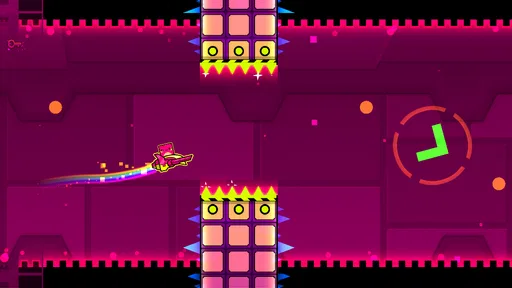
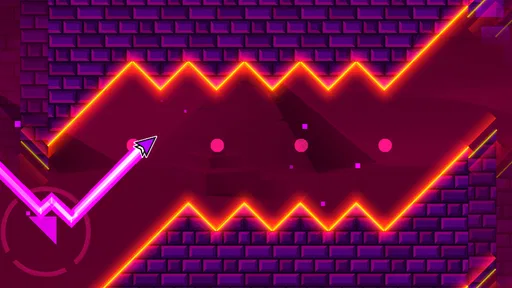
So, what’s the deal with the gameplay? You control a geometric icon—think square, spaceship, or even a little fish—that moves through levels filled with obstacles. Your job? Jump, fly, and flip your way through each level, all synced to some seriously catchy tunes. The music is more than just background noise; it’s integral to the game, helping you time your jumps and get into the zone.
Each level is unique and presents its own set of challenges. You start simple, but trust me, things ramp up pretty quickly. The trick is to keep going, even when you hit those seemingly impossible spots. There’s a real sense of accomplishment when you finally nail a level after countless attempts.
One practical way I keep attempts useful is to treat a failure as information instead of immediately tapping through in frustration. I pay attention to the obstacle or beat that ended the run, then concentrate on that moment the next time I reach it. Since the game asks for precise timing, a small adjustment in when I tap can matter more than tapping faster. This makes practice feel less like random repetition, though it doesn’t remove the need to repeat sections until the timing becomes familiar.
That focus also helps answer whether it works for short breaks. It can: a single attempt is easy to fit into a spare moment, and there is no need to prepare a long session before opening it. But the stop-start rhythm can be awkward if I’m distracted, interrupted, or unable to give the screen my attention. I get more from it when I can listen and concentrate for a few minutes than when I’m checking it between other tasks.
Visuals and Soundtrack
Visually, Geometry Dash SubZero is a treat. The graphics are sharp and colorful, with each level having its own distinct theme. The animations are smooth, and the design is minimalistic yet vibrant. It’s the kind of game where you might find yourself pausing just to appreciate the cool geometric patterns.
And then there’s the soundtrack. Honestly, the music is half the fun. It’s a mix of electronic beats that perfectly match the pace of the game. It’s designed to get you in the rhythm of the jumps and flips, and it’s catchy enough that you might find yourself humming along even after you’ve put the game down.
The sound is also part of the learning process, not just decoration. When I’m trying to improve, listening for the beat can help me build a steadier sense of when to act than relying only on the moving shapes. That advantage has a trade-off: if I’m somewhere noisy, playing without being able to follow the music can make the timing feel harder to read. I’d choose a quieter moment when I want to work through a tricky part, rather than treating every setting as equally suitable.
Learning Curve and Replayability
If you’re new to the world of Geometry Dash, don’t sweat it. The game does a decent job of easing you into the mechanics, but make no mistake—it’s challenging. You’ll need to practice and memorize patterns to advance, and yes, you will die. A lot. But that’s part of the fun! Each failure is a learning experience, and you’ll find yourself getting better with each try.
The replayability factor is high. You’ll want to go back to improve your scores, and the game’s leaderboard system adds a competitive edge. It’s not just about completing the levels; it’s about mastering them.
For month-to-month value, I think the key question is whether I enjoy refining a skill after the initial surprise wears off. The game can reward that kind of personal progress: an obstacle that once seemed unreadable can become manageable as I learn its rhythm and remember what comes next. That can make returning satisfying without needing a new reason every time. If I only enjoy a game when it constantly introduces fresh activities, however, this concentrated format may feel limited sooner than a broader arcade collection.
Compared with many casual arcade games, which often emphasize quick variety or simple score-chasing, this one asks for more deliberate repetition and memorization. That is its strongest distinction and its main limitation. I’d pick it over a lighter reflex game when I want a clear skill challenge, but I’d choose something less demanding if I wanted relaxed play, a changing set of short activities, or progress that doesn’t depend so much on repeating a difficult passage.
Making Practice Feel Less Like a Grind
One useful habit is to set a small goal before opening the game: focus on understanding one difficult stretch, or make a more controlled attempt at a level, rather than demanding an immediate win. That changes the mood of a session. A failed run can still count as progress if I can identify what caught me off guard and adjust my timing. Without that goal, repeated failure can blur together and make the game feel harsher than it needs to.
I also try to stop when I notice that I’m tapping impatiently instead of paying attention. This is a simple but important trade-off: persistence is necessary, yet every extra attempt is not automatically a useful one. Taking a break can help me return with a clearer sense of the rhythm. For a commute or a quiet wait, the game can be a compact challenge; in a busy setting where I’m repeatedly pulled away, the same retry loop may become irritating rather than absorbing.
Who Will Stick With It—and Who May Not
I’d recommend it most to players who like learning patterns, sharpening timing, and earning progress through repeated attempts. It also suits someone who wants an arcade game that can be opened for a brief challenge without needing to plan a long play session. People who enjoy electronic music and visual movement that tracks the action may find the combination especially satisfying.
I’d be more cautious about recommending it to anyone who dislikes restarting after mistakes, finds repeated failure stressful, or wants a gentle game to unwind with. It is not a good match for a player who expects every session to feel easy or varied. The Everyone rating describes its age suitability, not whether its difficulty is comfortable; a younger or less experienced player may still need patience to get past the steepening challenge.
Final Thoughts
All in all, Geometry Dash SubZero is a fantastic way to kill time while honing your reflexes. It’s addictive in the best way possible, and it’s challenging enough to keep you coming back for more. Whether you’re chilling at home or on the go, this game is perfect for quick sessions or long marathons. Just be prepared to get a little frustrated—and have a lot of fun.
For me, its lasting value comes from the satisfaction of making a difficult sequence feel learnable, not from endless variety. The maintenance burden is low in the sense that the game asks for no elaborate routine: I can return, play, and stop. The harder part is managing my own patience. If I keep expecting each attempt to succeed, fatigue sets in; if I treat practice as gradual improvement, it is easier to enjoy. That difference is what decides whether it stays installed after the first burst of excitement.
So, if you’re ready to test your skills and enjoy some killer beats, give Geometry Dash SubZero a download. It’s free, it’s fun, and who knows? You might just become the next Geometry Dash master.
Privacy and Permissions
See what permissions an app requests and how it handles your data.
- Photos/Media/Files
- read the contents of your USB storage, modify or delete the contents of your USB storage
- Storage
- read the contents of your USB storage, modify or delete the contents of your USB storage
- Wi-Fi connection information
- view Wi-Fi connections
- Other
- view network connections, full network access, control vibration, prevent device from sleeping, Google Play license check
Verdict
Strengths of Geometry Dash SubZero
- Engaging and challenging gameplay
- Vibrant and eye-catching graphics
- Great soundtrack enhances experience
- Simple controls, easy to learn
- Frequent updates with new levels
Limitations of Geometry Dash SubZero
- Can be frustratingly difficult
- Limited levels compared to full version
- Ads can interrupt gameplay
- No multiplayer mode available
- In-app purchases can be pricey
Other Releases by RobTop Games
View All
Geometry Dash Lite
Arcade4.4

Geometry Dash World
Arcade4.5

Geometry Dash Meltdown
Arcade4.6

Geometry Dash
Arcade4.7
Similar Picks in This Category
View All
Subway Surfers
SYBO Games4.6

Stickman Party 234 MiniGames
PlayMax Game Studio4.6

Subway Princess Runner
Ivy4.4

Temple Run
Imangi Studios4.2

Zombie Tsunami
Mobigame SAS4.6

Stack Ball - Crash Platforms
CASUAL AZUR GAMES4.5
Frequently Asked Questions
What is Geometry Dash SubZero and how does it differ from the original Geometry Dash?
Geometry Dash SubZero is a standalone expansion of the popular rhythm-based platformer, Geometry Dash. Unlike the original game, SubZero offers three unique levels with entirely new soundtracks and visual themes. It is designed to provide an extra challenge with its notoriously difficult levels, making it perfect for seasoned players looking for a fresh experience.
Is Geometry Dash SubZero free to play, and are there any in-app purchases?
Yes, Geometry Dash SubZero is free to download and play on both Android and iOS platforms. However, it may offer in-app purchases for additional features or to remove ads. These purchases are optional and not necessary to enjoy the full gameplay experience, allowing players to fully engage with the levels without spending money.
What are the system requirements for Geometry Dash SubZero on mobile devices?
To run Geometry Dash SubZero smoothly, Android users need a device running Android 4.0 or higher, while iOS users require iOS 8.0 or later. The game is optimized for both smartphones and tablets, ensuring a seamless experience. It’s advisable to have a device with decent processing power to handle the fast-paced gameplay without lag.
Can I play Geometry Dash SubZero offline, or do I need an internet connection?
Geometry Dash SubZero can be played offline, making it a perfect game for on-the-go entertainment without the need for an internet connection. However, if you wish to access certain features like leaderboards or updates, you will need to connect to the internet. Offline play is ideal for enjoying the core levels and challenges.
How does the difficulty level in Geometry Dash SubZero compare to other games in the series?
Geometry Dash SubZero is known for its challenging difficulty, even more so than some levels in the original game. It features intricate level designs and precise timing requirements that are sure to test the skills of even the most experienced players. This makes SubZero particularly appealing to fans who enjoy a tough, adrenaline-pumping challenge.
Play our best games!


